
Transform Your Vision Into Cinematic Reality with Kling O1
Last verified: March 11, 2026
Kling O1, developed by Kuaishou Technology and officially launched on December 1, 2025, represents the world's first unified multimodal video model. Unlike previous tools that separate creation and editing, Kling O1 handles everything in one place—combining text-to-video, image-to-video, and advanced video editing into a single, cohesive architecture. Built on the MVL (Multimodal Visual Language) architecture, this revolutionary model blends language, images, references, motion, and video editing tools into a single unified creative system. The model delivers native 2K resolution outputs at 30fps with unmatched character consistency, solving the industry's biggest challenge: keeping actors and scenes looking the same across different shots.
Kling O1 allows you to generate clips anywhere between 3 to 10 seconds, giving you full control over pacing. What makes this model truly groundbreaking is its ability to accept mixed inputs—up to 7 simultaneous inputs combining tracked elements, style reference images, and optional start frames in a single generation. With Semantic Editing, you can simply type commands to edit your video using natural language—no manual masking or tracking required. Whether you're removing unwanted objects, changing lighting from daytime to dusk, or swapping entire subjects, Kling O1 interprets your instructions and executes pixel-level semantic reconstruction in seconds.
For creators on Vidofy.ai, Kling O1 unlocks an entirely new level of storytelling power. It's the most creator-friendly video model available today: stable, multimodal, expressive, and designed around real filmmaking logic, giving you a level of control that simply didn't exist before. From independent filmmakers to marketing teams, Kling O1 transforms video workflows by eliminating the need to stitch between multiple tools, enabling true single-pass video generation and editing that respects camera angles, movement patterns, and spatial relationships.
Explore Kling AI's Models
2K Resolution with Unmatched Character Consistency
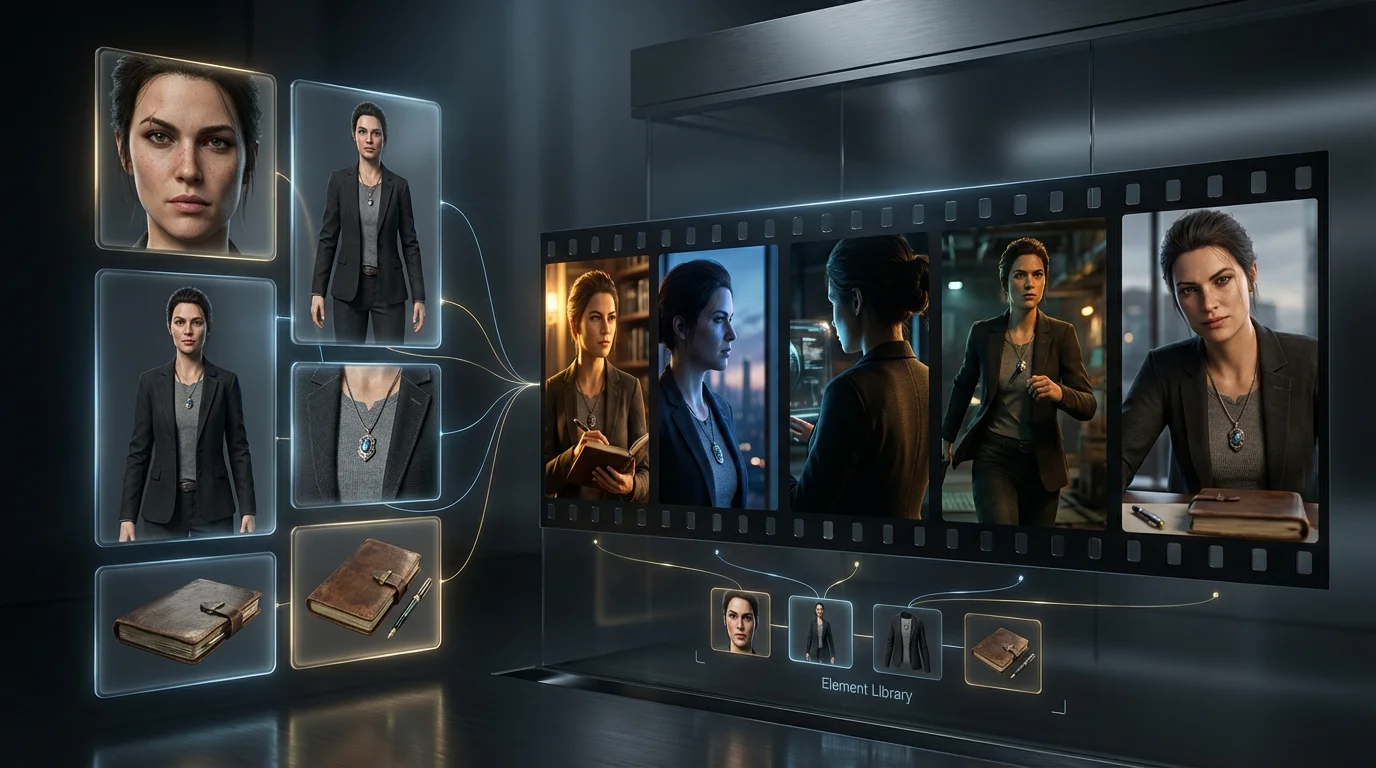
Kling O1 delivers native 2K resolution outputs with unmatched character consistency, allowing you to lock in identities across multiple shots using the advanced Element Library. This isn't just about pixel count—it's about maintaining the exact facial features, clothing details, and prop characteristics across every frame, even as camera angles shift and lighting changes. Addressing the critical pain point of character and scene inconsistency in real-world AI video adoption, Kling O1 features enhanced foundational comprehension of images and videos, independently tracking and preserving the fidelity of each character and prop. Upload reference images once, and the model remembers them like a professional director, ensuring industrial-grade consistency that's essential for narrative filmmaking, brand campaigns, and episodic content. The result? Cinematic-quality footage where your actors never suffer from 'identity drift'—a persistent problem that has plagued AI video generation until now.
Natural Language Editing: No Masking, No Tracking
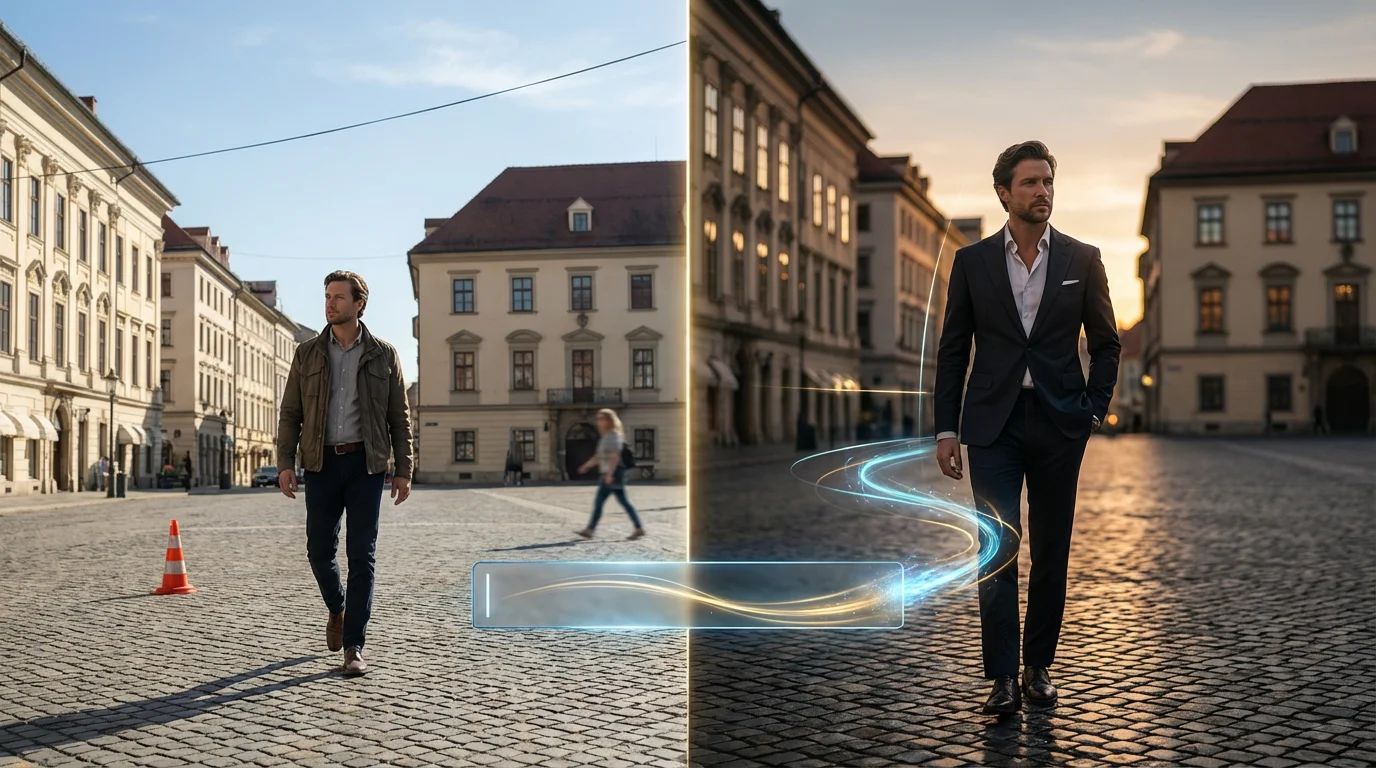
With Semantic Editing, you can simply type commands to edit your video or use video and image references—Kling O1 understands the entire motion structure of your input video and applies transformations that respect camera angles, movement patterns, and spatial relationships. Remove unwanted objects, wires, or people simply by natural language—no manual tracking required. Want to change daytime to dusk? Type it. Need to swap a character's outfit? Describe it. The model understands 3D geometry to adjust light and shadow, and can modify camera angles, transform a wide shot into a close-up, or change the lens type with a text prompt. This eliminates hours of traditional VFX work that would normally require rotoscoping, masking, and frame-by-frame adjustments. For content creators and marketing teams, this means you can iterate on creative concepts in minutes instead of days, testing different versions without reshooting or hiring VFX specialists.
7-in-1 Unified Engine: Generation Meets Editing
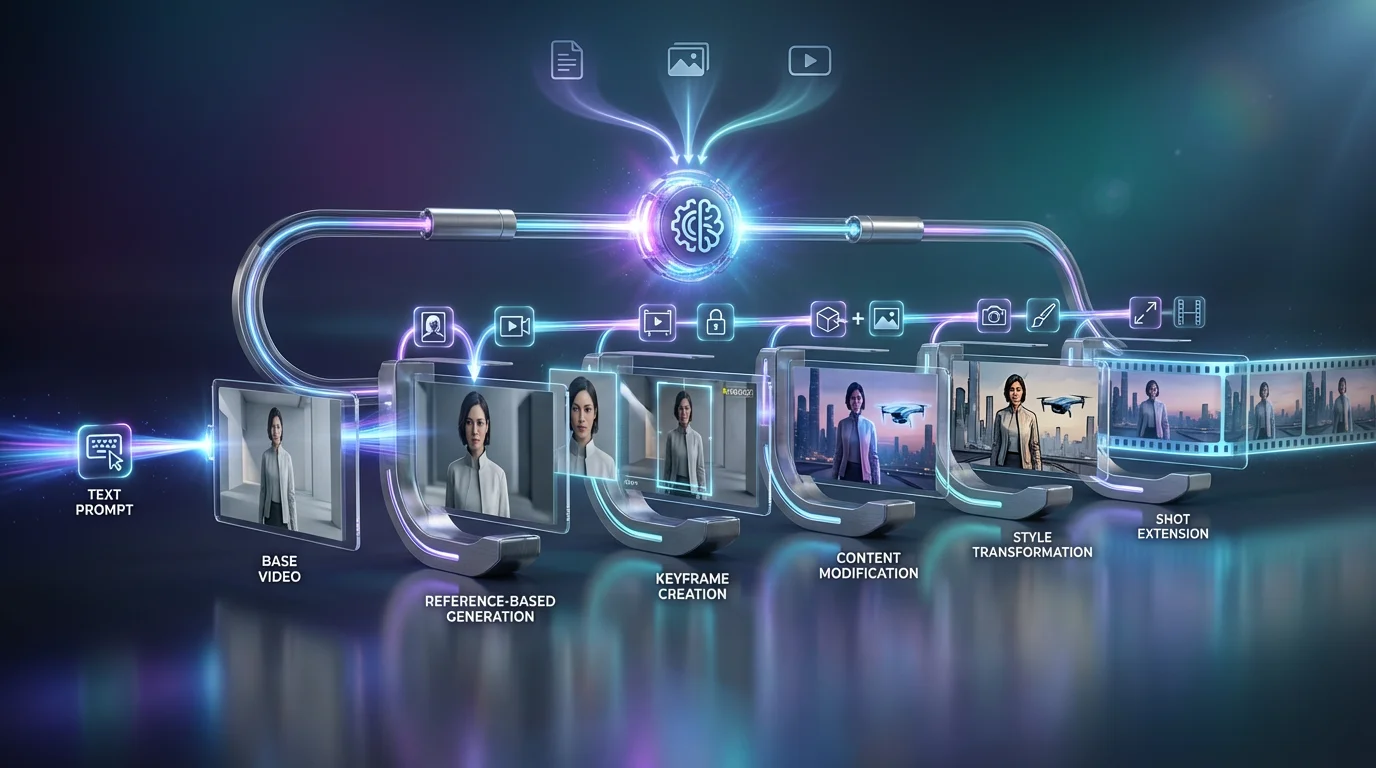
Kling O1 consolidates all video creation tasks in one model: text-to-video, reference generation, keyframe creation, content modification, style transformation, and shot extension. This means creators can now generate, edit, extend, and restyle video shots inside one model without stitching between tools, multi-step pipelines, and guesswork. Kling O1 enables 'skill combos,' transcending single-task limitations—users can command the model to 'insert a subject while simultaneously modifying the background context' or 'generate from a reference image while shifting the artistic style'. This unified approach is powered by the Multimodal Visual Language (MVL) framework, which processes text, images, and video simultaneously. The practical impact? You can start with a text prompt, generate a base video, immediately edit specific elements, apply style transfers, and extend the duration—all within a single, continuous workflow. No more exporting, importing, or context-switching between different tools.
Unified Powerhouse: How Kling O1 Dominates Pixverse 5.5
The AI video landscape is evolving rapidly, but not all models are created equal. While Pixverse 5.5 offers solid multi-shot capabilities, Kling O1 redefines what's possible by unifying generation and editing into a single, seamless workflow. Here's how these two models stack up across the metrics that matter most to professional creators.
| Feature/Spec | Kling O1 | Pixverse 5.5 |
|---|---|---|
| Resolution & Frame Rate | 2K (1080p+) @ 30fps | Up to 1080p @ 30fps |
| Video Duration | 3-10 seconds (user-controlled) | 5-10 seconds |
| Multi-Reference Inputs | Up to 7 elements + video refs | Up to 3 images (Fusion) |
| Editing Capabilities | Unified: Natural language editing, object removal, style transfer, video-to-video | Separate: Effects-based, limited post-generation editing |
| Character Consistency | Director-like memory with Element Library | Standard frame consistency |
| Architecture | MVL (Multimodal Visual Language) + Chain-of-Thought | Diffusion-based multi-modal |
| Start/End Frame Control | Yes (@ syntax for precise control) | Yes (Key Frame Control) |
| Audio Integration | Not officially documented | Integrated audio generation (Pixverse 5.5) |
| Accessibility | Instant on Vidofy | Also available on Vidofy |
Detailed Analysis
Analysis: The Unified Workflow Advantage
Kling O1's defining strength is workflow unification—giving a single model the mandate to understand text, images, and video, and to perform both generation and rich instruction-based editing inside the same semantic system. While Pixverse 5.5 excels at multi-shot sequence generation and offers impressive audio integration, it still operates within traditional boundaries where creation and editing are separate processes. Kling O1 integrates text-to-video, image-to-video, and advanced video editing into a single cohesive architecture, utilizing deep semantic understanding to interpret complex prompts without the need for multiple disparate tools. This means you can generate a base video, then immediately edit specific elements using natural language commands—all without leaving the platform or switching modes. For professional workflows requiring rapid iteration, this consolidation can dramatically simplify production speed and tooling complexity.
Analysis: Character Consistency & Memory
Kling O1 features 'director-like memory,' retaining the identity of main characters, props, and settings, ensuring feature stability amidst dynamic camera movements. Even in complex group scenes or interactive scenarios, Kling O1 independently tracks and preserves the fidelity of each character and prop, delivering industrial-grade consistency across all shots. While Pixverse 5.5 maintains solid frame-to-frame consistency and supports multi-image fusion, it doesn't offer the same level of persistent character memory across different shots and angles. Using the Element Library, you can upload reference images of your character or props, and the model 'remembers' their features just like a human director. This is the critical difference for narrative filmmaking, advertising campaigns, and any project requiring characters to remain visually identical across multiple scenes with varying camera positions and lighting conditions.
The Verdict: Choose Unified Power
Use this quick guidance to pick the best option for your workflow.
Get Your Result in 3 Simple Steps
Follow these 3 simple steps to complete your task quickly.
Step 1: Choose Your Mode & Upload References
Select between Generation Mode (create from scratch) or Edit Mode (modify existing footage). Upload up to 7 reference images for characters, props, or style guidance. You can also provide start and end frames for precise control over your video's composition and narrative flow.
Step 2: Craft Your Prompt with @ Syntax
Write a detailed text prompt describing your scene, camera movement, lighting, and action. Use Kling O1's unique @ syntax to reference specific elements (e.g., '@Element1 walks toward @Element2 in a sunset landscape'). Set your duration (3-10 seconds) and let the MVL architecture interpret your creative vision.
Step 3: Generate, Edit & Iterate Seamlessly
Click generate and receive your cinematic 2K video in seconds. Need changes? Use natural language commands to edit directly: 'remove the background person,' 'change lighting to moonlight,' or 'swap the character's outfit.' Iterate instantly without re-rendering or switching tools—all within one unified workflow.
Frequently Asked Questions
Is Kling O1 really free to use on Vidofy?
Yes! Vidofy provides free access to Kling O1 with daily credits that allow you to experiment with the world's first unified multimodal video model. Free tier users can generate multiple videos per day depending on duration and resolution settings. For unlimited access and priority generation, premium plans are available with flexible pricing.
Can I use Kling O1 videos for commercial projects?
Absolutely. Videos generated with Kling O1 on Vidofy can be used for commercial purposes including advertising campaigns, client work, social media content, film production, and e-commerce. Always review Vidofy's terms of service for the most current licensing details, but commercial rights are included with paid plans.
What makes Kling O1 different from other AI video models?
Kling O1 is the world's first unified multimodal video model, meaning it combines generation and editing in a single architecture. Unlike competitors that require separate tools for creation and modification, Kling O1 uses natural language commands to edit existing footage, maintains character consistency with 'director-like memory,' supports up to 7 simultaneous reference inputs, and delivers native 2K resolution at 30fps. It's built on the MVL (Multimodal Visual Language) framework with Chain-of-Thought reasoning for unprecedented control.
What are the technical limitations of Kling O1?
Kling O1 currently generates videos between 3-10 seconds in duration at 2K resolution (1080p+) and 30fps. While this is ideal for social media clips, ads, and scene previews, longer narrative content requires generating multiple clips. The model performs best with clear, detailed prompts that specify camera movement, lighting, and subject actions. Complex multi-character interactions may require iteration to achieve perfect results.
How does the Element Library and character consistency work?
The Element Library allows you to upload reference images of characters, props, or objects that Kling O1 will 'remember' across different generations. Using the @ syntax (e.g., @Element1, @Element2), you can reference these stored elements in your prompts, and the model maintains their visual identity—facial features, clothing, proportions—even as camera angles, lighting, and backgrounds change. This 'director-like memory' solves the persistent problem of character inconsistency that plagued earlier AI video models.
What devices and browsers does Vidofy support for Kling O1?
Vidofy's Kling O1 interface works on all modern web browsers (Chrome, Firefox, Safari, Edge) across desktop, tablet, and mobile devices. Since generation happens in the cloud, you don't need a powerful GPU—just a stable internet connection. Videos are generated on Vidofy's servers and delivered to your device for download. Mobile users get the same full feature set as desktop users, making Kling O1 accessible anywhere.